Investing in a small Ferris wheel for sale can be a profitable decision for amusement parks, shopping malls, or family entertainment centers. However, before making a purchase, it’s crucial to understand the safety standards that govern amusement rides. Compliance not only protects riders but also safeguards your business from legal risks and costly downtime.
Below, we’ll cover the most important safety considerations you should know before buying.
1. International and Local Safety Certifications
When evaluating suppliers, check whether the small Ferris wheel for sale meets recognized safety standards:
EN 13814 (Europe) – Covers design, construction, operation, and inspection of amusement rides.
ASTM F2291 (United States) – Specifies design and manufacturing guidelines for amusement devices.
ISO 17842 – An international standard ensuring mechanical and operational safety.
Local regulations – Always verify the laws and certifications required in your country or region.
A compliant ride means greater peace of mind and smoother approval from regulatory bodies.
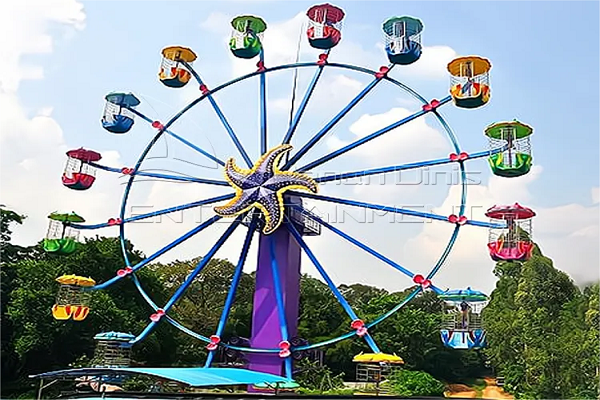
2. Structural Integrity and Material Quality
A Ferris wheel’s safety depends on the strength of its structure:
Steel framework – Must be rust-resistant, durable, and able to handle heavy loads.
Seating systems – Seats should be impact-tested, with reinforced bars and proper cushioning.
Corrosion protection – Galvanized or powder-coated materials prevent weather damage.
Always request technical documents and load-bearing test results from your supplier.
3. Passenger Restraint Systems
Rider safety starts with secure seating:
Lap bars or seat belts – Every gondola should have a reliable restraint system.
Locking mechanisms – Must remain secure throughout the ride and release easily afterward.
Child safety – For rides targeting families, smaller seat designs and dual restraints may be necessary.
4. Electrical and Mechanical Safety
Family Ferris wheel for sale rely on motors, gears, and electrical systems to operate smoothly.
Backup power systems – Prevent sudden stops in case of outages.
Overload protection – Motors should include safety cut-offs to avoid overheating.
Anti-slip platforms – Essential for safe boarding and disembarking.
Routine inspections of these systems are mandatory to prevent accidents.
5. Regular Inspections and Maintenance
Even the safest Ferris wheel requires ongoing care:
Daily checks – Inspect seats, restraints, and control panels before operation.
Monthly inspections – Test electrical wiring, bolts, and moving parts.
Annual certification – Many regions require third-party safety inspections for continued operation.
A strong maintenance plan is as important as initial compliance.

6. Emergency Procedures and Staff Training
Safety standards also extend to ride operation:
Emergency stop buttons – Easily accessible for staff.
Evacuation plans – Clear procedures for safely unloading passengers if the ride stops.
Operator training – Staff should know how to identify unusual noises, vibrations, or malfunctions.
Well-trained operators are your first line of defense against accidents.
Conclusion
Before buying a small Ferris wheel for sale, take the time to review its safety certifications, structural design, restraint systems, electrical safeguards, and maintenance requirements. Partnering with a manufacturer that prioritizes compliance and offers after-sales support ensures your investment is both profitable and safe.
Looking for a reliable supplier of small Ferris wheels that meet international safety standards? Contact us today for expert guidance and high-quality amusement rides. Click here for more detailed information: https://www.outdoorparkrides.com/small-ferris-wheel-for-sale/
Leave a Reply