Large scenic attractions face a specific transport problem: long routes, changing terrain, and guests who need to cover distance without missing the view. Both rail-mounted and trackless trains can solve it, but they behave very differently on a big site. This article compares a track-mounted sightseeing train for scenic attractions with a trackless alternative, and explains where each performs best.
Route Length and Stability
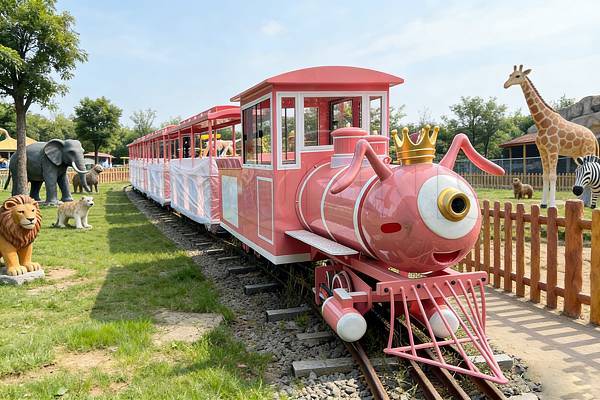
Rail systems excel on long, defined routes. Because the alignment is fixed and the running gear is guided, a track-mounted train maintains a steady speed and a consistent ride quality over kilometres of route, which matters when guests stay on board for twenty minutes or more. On a large scenic site with established viewpoints, that predictability is a genuine advantage rather than a limitation.
Terrain, Gradients, and Weather
Rails handle gentle gradients consistently, including in rain, because the wheel-to-rail contact is unaffected by mud or loose gravel. Trackless trains depend on the quality of the paved surface and can struggle where routes flood or soften. Where a scenic attraction crosses undulating ground or experiences heavy rainfall, a rail alignment with proper drainage usually proves more reliable through the season.
Capacity and Operating Consistency
Track-mounted trains generally offer higher capacity per consist, and their fixed stations make boarding predictable. That consistency supports a published timetable, which large attractions need: guests plan their day around departures. If capacity is your main constraint, a scenic attraction train on rails will usually move more people per hour than a comparable tyre-based fleet.
Where Trackless Trains Win
Trackless trains remain the better choice when the layout is still evolving, when the attraction wants to change routes seasonally, or when the available budget cannot support track construction. They also suit indoor areas and paved promenades where rails would be impractical. A well-chosen trackless train for scenic spots can deliver excellent service on a moderate route, particularly where the park expects to expand or rearrange zones in the coming years.
Construction Effort and Maintenance
Rails demand earthworks, a prepared sub-base, drainage, and permanent stations, and maintenance focuses on track condition, joints, and rolling stock. Trackless trains need less initial civil work but more tyre, suspension, and battery attention, and their routes must stay clear and well surfaced. The trade-off is investment up front against operating attention over time.
Guest Experience and Storytelling
Passengers perceive a rail train as a classic attraction, with the rhythm and sound that make the journey feel authentic. Trackless vehicles feel more like modern shuttle transport. For a large scenic attraction building its brand around landscape and heritage, the rail experience often justifies the additional construction.
For large scenic attractions with permanent routes and heavy passenger volumes, a track-mounted sightseeing train usually delivers better capacity, weather resistance, and guest experience, while trackless trains remain the flexible option for evolving sites. Work with an experienced Dinis scenic train supplier that supplies both systems and can model capacity for your route, and review the principles of a scenic railway when planning stations and alignment. To compare options and request a proposal, visit https://www.dinistrains.com/track-mounted-sightseeing-train-rides/.
Leave a Reply