A water park equipment list is more than a catalogue of slides and splash features. A complete project includes the attractions guests see, the pumps and treatment systems behind them, the drainage and utilities below the site, and the controls, documentation, and spare parts needed to operate safely.
Buyers often begin with How much does it cost to build a water park as a reference, but the equipment schedule should be built from the chosen attraction, site, and operating capacity. The most useful checklist separates guest-facing rides from the supporting infrastructure and clearly assigns responsibility for each item.
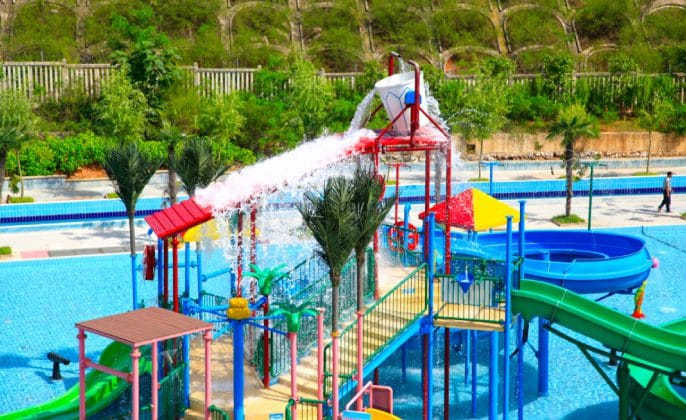
Water Attractions and Guest-Facing Equipment
The attraction package can include slides, splash structures, play features, pools, wave equipment, lazy-river components, and children’s water play. Each product has its own water demand, user rules, queue arrangement, and maintenance requirements.
Choose attractions according to the target audience and available space. A family park may prioritize shallow play and medium slides, while a destination water park may need a wider range. Do not add equipment unless the supporting water system and operating team can handle it.
Hydraulic and Treatment Equipment
| Equipment group | Purpose | Required design information |
|---|---|---|
| Pumps | Move water through attractions and treatment | Flow, head, redundancy, and control method |
| Filtration | Remove suspended material | Turnover basis, media, and maintenance access |
| Disinfection | Maintain water quality | Dosing controls, testing, and chemical storage |
| Balance and storage | Manage water volume and surges | Tank sizing and level controls |
| Valves and pipework | Direct flow and isolate equipment | Material, pressure class, and accessibility |
The hydraulic calculation must match the final attraction schedule. A generic pump package is not enough when slide flows, play features, and pool circulation operate together.
Drainage, Utilities, and Site Systems
Check the supporting capacity before approving equipment
Drainage removes splash, cleaning water, and rainfall without creating hazards. Utility systems provide power, controls, communications, and water connections. The project list should include trenching, foundations, electrical protection, access pits, and reinstatement where these are not part of the ride supply.
Identify the interface at each equipment boundary. A pump may be supplied by the attraction vendor, while the electrical feeder and final connection are local scope. These responsibilities should be written into the budget and installation schedule.
Before finalizing the list, compare the demand of each attraction with the available water, power, and drainage. Calculate simultaneous operating scenarios so one group of features does not consume capacity needed for another. The design should show expected and peak conditions rather than a nominal total that the site cannot support.
Review the list with the staff who will operate and maintain it. Easy maintenance access can avoid adding temporary pumps, lifting equipment, or shutdown work later.
Safety and Guest-Service Equipment
A complete list includes gates, fences, handrails, depth markers, signage, emergency equipment, first-aid provisions, and staff communication. Guest facilities such as changing areas, seating, and shade also belong in the project plan even if a separate contractor supplies them.
Surfacing requires special attention. Rubber may be used for selected walkways or protective surfaces where the design confirms slip resistance, drainage, and compatibility with cleaning. The surface must suit the wet environment and be maintainable.
Controls, Monitoring, and Communication
The controls package should cover attraction operation, pumps, treatment, alarms, and energy isolation. Staff need clear displays and documented responses to faults. Confirm that the control system can show which area has failed and prevent unsafe operation.
- Identify central and local control panels.
- Confirm alarm and emergency shutdown functions.
- Provide remote support only through approved methods.
- Record software versions and passwords.
- Include operator and technician training.
Maintenance, Spare Parts, and Documentation
Ask for the recommended first-season spares, special tools, lubricants, and testing supplies. The package should identify long-lead parts and local substitutes that are not approved.
Documentation should include approved drawings, wiring information, operating procedures, maintenance schedules, inspection forms, and equipment certificates. The handover file must match what was installed, not a preliminary concept.
Create a Procurement Checklist
- Attraction and water-play products.
- Pumps, filtration, disinfection, storage, and valves.
- Controls, alarms, and electrical distribution.
- Drainage, foundations, utilities, and surfacing.
- Shade, fencing, signage, and guest facilities.
- Installation, training, spares, and documentation.
The water park equipment cost breakdown should use this list to divide factory supply, local site work, and operation. Keeping the lines separate makes the budget easier to compare and reveals omissions before construction.
The final list should also identify who installs, tests, trains, and supplies documentation for each line item. These responsibilities are as important as the equipment itself because unclear handovers delay opening and create gaps in the maintenance plan.
Coordinate the Final Design
Begin with an operations-led review of childrens water park equipment safety and keep the safety requirements visible. Operators should review explore the water area plan while engineering confirms hydraulic capacity, structural loads, and electrical design.
A outdoor attraction equipment manufacturer can coordinate equipment interfaces, while the park confirms the local utilities and operating plan. A package planned by Dinis water attraction planning should reach the site with drawings, training, spares, and clear responsibilities already aligned.
Verify the Complete Package
Before final acceptance, compare the delivered equipment against the approved list. Test attractions, pumps, treatment, controls, alarms, drainage, and emergency systems. Confirm that maintenance access works in normal conditions and that every manual and spare part is available.
The best equipment list is complete, traceable, and matched to the operating plan. Build it around the guest experience and the systems that keep the water moving safely.
Leave a Reply