Shopping malls and resorts are not amusement parks, but both face the same problem: guests have already arrived, and the operator needs a reason for them to stay longer, spend more and come back. A vertical ride solves that problem in a way that a food court or a cinema cannot, because it changes the building’s identity.
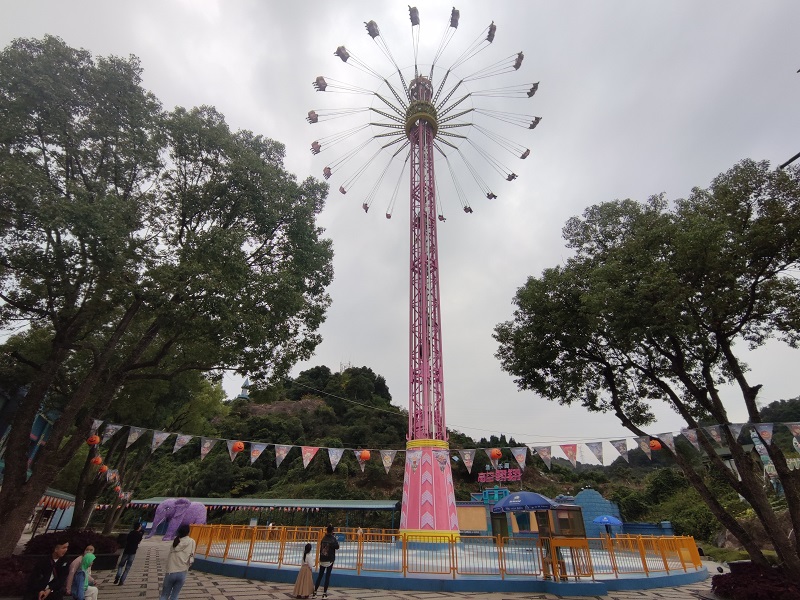
This article explains how a 42m sky flyer ride for sale can benefit a shopping mall or a resort, what has to be checked before a rooftop or plaza installation, and where the business case usually fails.
1. Two Venues, One Vertical Asset
A mall competes for footfall within a catchment; a resort competes for occupancy and on-site spend. Both benefit from an attraction that cannot be found in every competing venue within a short drive.
A tower ride delivers that difference. It is visible from outside, it gives guests a reason to visit a specific part of the property, and it creates images that travel on social media without a paid media budget.
2. Drawing Footfall to a Specific Zone
Malls often have a dead zone: an upper floor, a rear wing or a rooftop that receives less traffic than the main atrium. A ride placed there becomes an anchor that pulls visitors through the property.
The effect works best when the route to the ride passes retail and food units. Guests who would never have visited the top floor now walk past shops they did not know existed.
3. Extending Dwell Time
Dwell time is the simplest measure of a venue’s commercial performance. A guest who stays an extra forty minutes is more likely to eat, buy and return.
A swing tower chair extends the visit in two ways: the ride itself takes time, and the queue and the photographs add more. In a resort, the same effect applies to the evening, when the pool closes and the property needs another reason for guests to stay on site.
4. The Rooftop Opportunity
Rooftops are often the most underused space in a mall or resort. They have the height, they are visually prominent, and they are usually free of the structural constraints of a retail floor.
A rooftop installation needs a structural review of the building, a crane plan for installation, and a lift or stair strategy for guests. It also needs wind assessment, because a rooftop site is more exposed than a ground-level plaza.
5. Photography and Social Reach
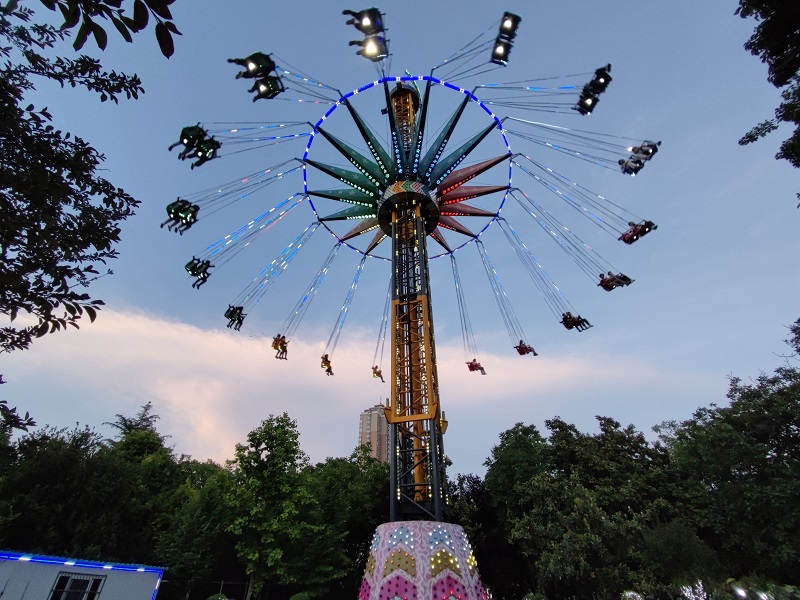
The commercial value of a tower is often measured in images rather than tickets. A lit tower visible from the street becomes the venue’s signature, and guests share it without being asked.
That value is maximised when the tower is visible from the entrance, the car park and the main public areas. A ride hidden behind a service block still works as an attraction, but it loses most of its marketing contribution.
6. Revenue Models Beyond the Ticket
Malls and resorts rarely sell ride tickets the way a theme park does. The more common models are:
- A paid ride ticket for walk-in guests
- A ride included in a mall loyalty or spend-and-play promotion
- A resort package that bundles the ride with dining or accommodation
- A private hire or event add-on for corporate and celebration bookings
The right model depends on who the venue serves. A mall with high walk-in traffic can sell tickets directly; a resort with resident guests usually captures more value through packaging.
7. Technical Fit: Structure, Power and Noise
A 42 m tower needs a designed foundation, a power supply that can deliver around 75 kW, and a control room or cabinet location near the ride. On a rooftop, the structural engineer must confirm that the building can carry the loads, including the overturning moment from wind.
Noise and vibration also matter in a building. The drive and the swinging gondola produce sound that can travel through structure, so the installation should be reviewed against the venue’s acoustic requirements.
8. What Venues Get Wrong
The first mistake is treating the ride as a decoration. Without lighting, marketing and a clear ticket or package model, it becomes an expensive piece of equipment that guests walk past.
The second is ignoring the guest flow. A ride that is hard to find, or that requires guests to leave the building and walk around it, loses most of its footfall benefit.
The third is underestimating the operating side: staffing, inspection, insurance and maintenance all apply to a mall or resort ride exactly as they do in a theme park.
9. A Feasibility Checklist
- Is there 25–30 m of clear space plus queue and service access?
- Can the building or ground carry the foundation loads?
- Is the power supply adequate and close to the ride?
- Is the ride visible from the street, entrance and public areas?
- Does the venue have a clear ticket or package model?
- Has wind exposure been assessed for the site?
- Is the maintenance and inspection budget in place?
A flying tower swing from Dinis can be specified for the venue’s footprint, and the structure is fabricated from steel with a protective coating for outdoor service. A flying swing tower by Dinis is supplied with foundation loads, electrical requirements and installation guidance, so the building’s engineer can check the design before construction begins. Dinis has supplied tower rides, ferris wheels, swing chairs and complete park equipment packages from Zhengzhou, China for more than twenty years. As an amusement equipment manufacturer, the company provides the technical documentation that a mall or resort needs for planning approval.
Current project reference: https://www.dinisdreammyland.com/products/42-m-sky-flyer-ride-for-sale/